Read a bill page
Every bill in Bill has one page that tells you where it stands and what it would change. Pages for Dutch bills are in Dutch; pages for EU procedures are in English. Below, labels are given as Dutch / English.
Where the bill stands
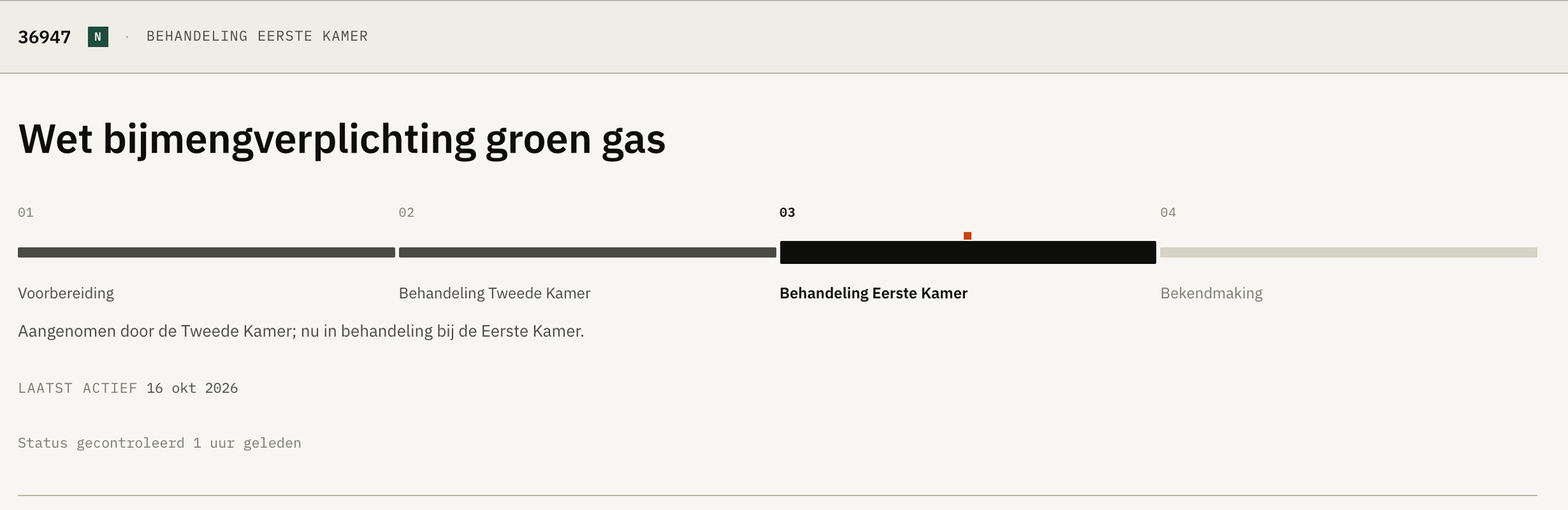
Section titled “Where the bill stands”- The top bar shows the reference, the source (NL or EU) and the phase, or the outcome once there is one: Aangenomen / Adopted, Verworpen / Rejected or Ingetrokken / Withdrawn.
- The phase strip shows the route of a Dutch bill: preparation, Tweede Kamer, Eerste Kamer and publication. One sentence under it says where the bill is now and what comes next.
- Laatst actief / Last active is the date of the latest movement. Bill checks every bill several times a day; if a status hasn’t been checked for two days, the page says it may be out of date.
What the bill does
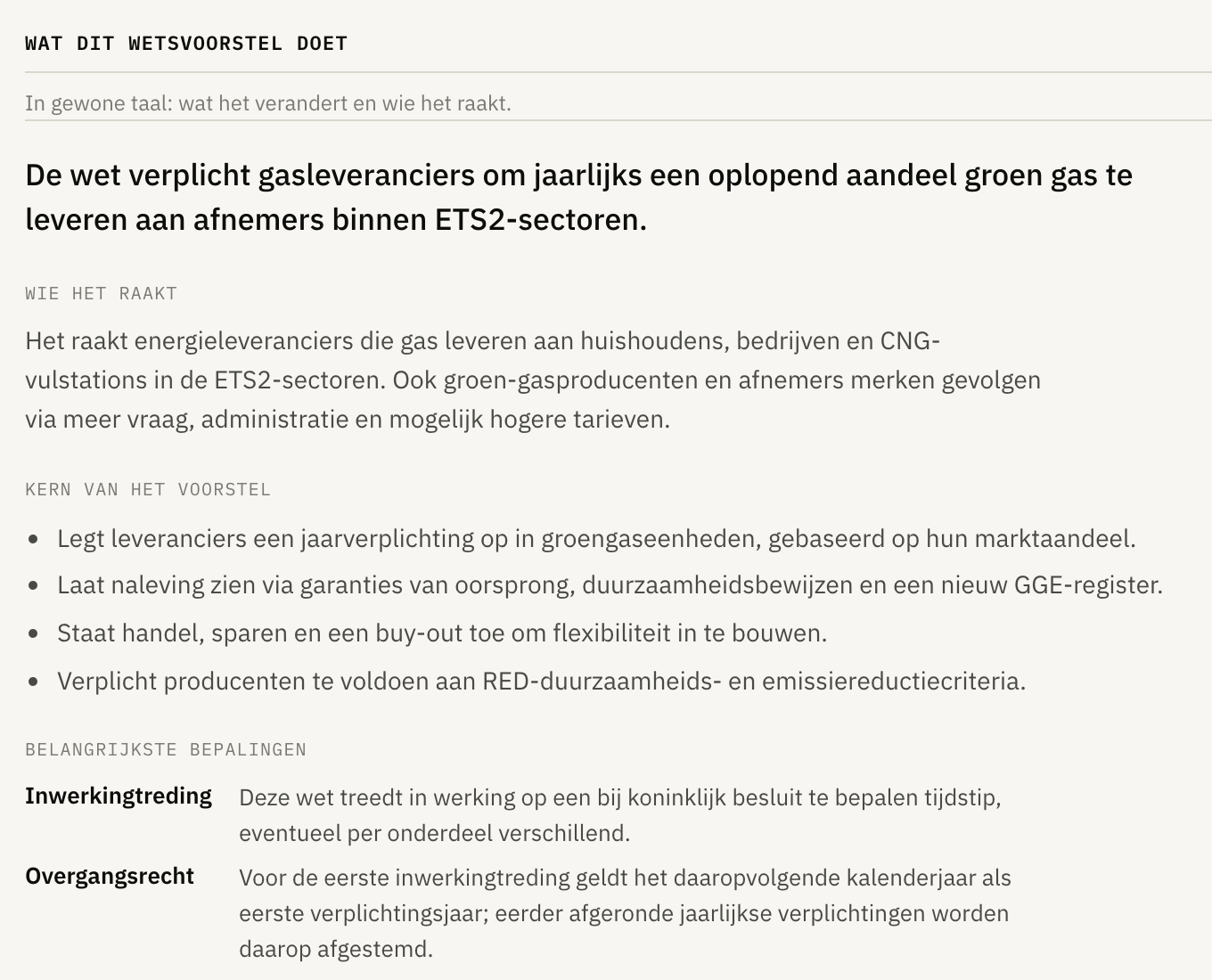
Section titled “What the bill does”Under Wat dit wetsvoorstel doet / What this bill does, Bill explains the bill in plain terms:
- Wie het raakt / Who it affects
- Kern van het voorstel / Core of the proposal
- Belangrijkste bepalingen / Key provisions, including when it takes effect, transitional law and how it interacts with other rules.
The articles it changes
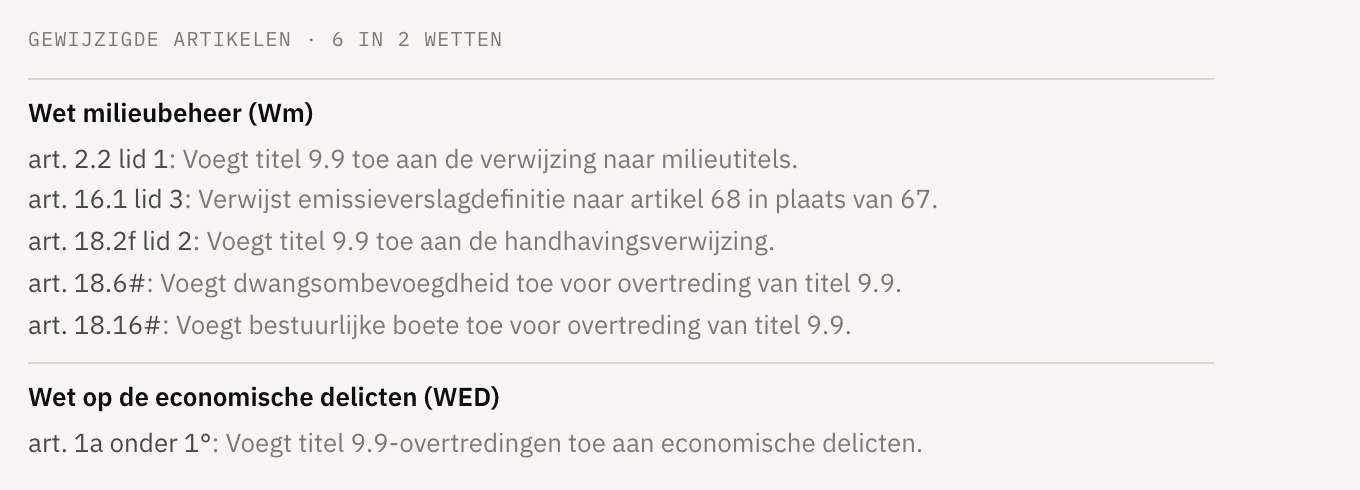
Section titled “The articles it changes”Gewijzigde artikelen / Articles changed lists every article the bill touches, grouped by law, with a one-line summary per article and whether it is inserted, amended, repealed or renumbered. A bill that replaces a whole act says so.
The latest update and documents
Section titled “The latest update and documents”Laatste update / Latest update summarises the most recent document, why it matters now, and what changed compared with the previous version. The documents themselves are listed below it.
Bronnen / Sources at the bottom links to the official pages: the Tweede Kamer, the Wetgevingskalender, and for EU procedures the EU Law Tracker, OEIL and EUR-Lex.